Diverging paths for Bitcoin mining and AI
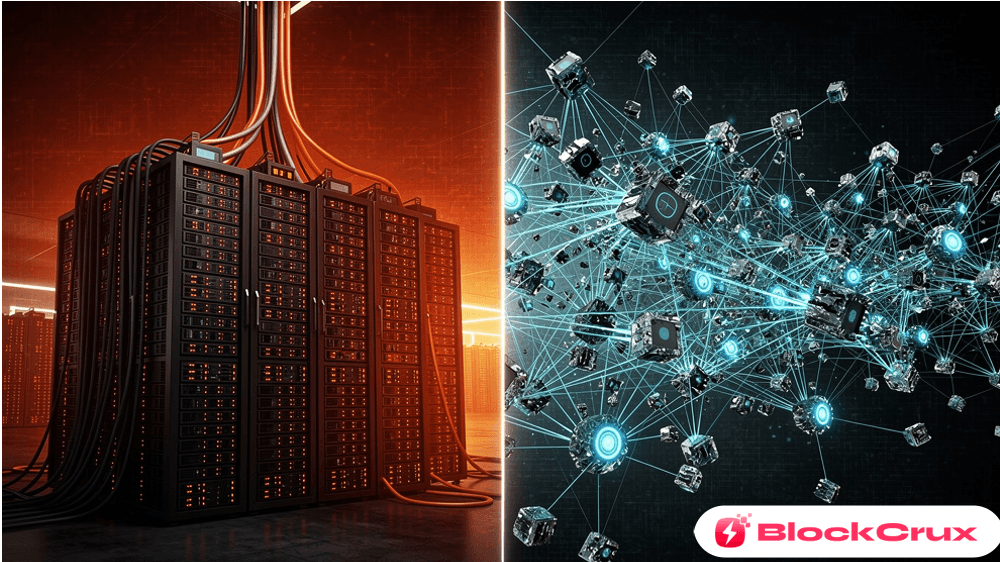
Alex Thorn from Galaxy Research points out something interesting about how Bitcoin mining and artificial intelligence are developing. He suggests they might be moving in opposite directions when it comes to centralization.
Bitcoin mining started out quite decentralized—people were running it on their personal computers. But over time, it’s become more centralized. Now you need specialized ASIC miners or large industrial-scale operations to compete effectively. That’s a shift from the original vision.
AI’s potential decentralization path
AI, on the other hand, might be going the other way. Thorn thinks AI began centralized in massive data centers and hosted clusters. But as these large models face challenges—things like data scarcity, context limits, and memory bottlenecks—open-source models could start catching up.
This matters because decentralization sits at the core of crypto’s promise. If Bitcoin mining keeps centralizing, people might worry about the network’s long-term resilience. It’s not just theoretical—these trends could affect how these technologies develop over the next decade.
The edge AI market expansion
There’s another piece to this puzzle: edge AI computing. This involves running AI models directly on local devices rather than sending everything to centralized cloud servers. The market for this is expected to grow significantly—from about $25 billion in 2025 to a projected $119 billion by 2033, according to Grand View Research.
What’s driving this growth? Several factors, really. The rapid expansion of IoT and connected devices creates demand for real-time processing. There’s also growing focus on data privacy and localized intelligence at the network edge. Industries want AI-enabled automation that doesn’t depend entirely on centralized systems.
Bitcoin’s geographic decentralization
Here’s a counterpoint though—Bitcoin mining might be decentralizing geographically even if it’s centralizing in terms of who controls the mining power. KuCoin reported that mining has become increasingly difficult in the United States due to energy costs. In some regions, the cost to mine a single Bitcoin has surpassed $100,000.
This is pushing mining operations toward places like Paraguay and Ethiopia, where there’s surplus hydroelectric power. So while individual mining might be less accessible, the geographic spread could actually enhance network security. Having mining distributed across different continents makes the network less vulnerable to any single country’s political or environmental issues.
I think both trends—the centralization of Bitcoin mining hardware and the potential decentralization of AI through edge computing—show how technologies evolve in unexpected ways. What starts as one thing can become something quite different as economic and technical realities set in.
The relationship between centralization and decentralization isn’t simple. Sometimes what looks like centralization in one aspect (who controls the mining hardware) might coexist with decentralization in another (where that hardware is located). And for AI, the push toward edge computing might create more distributed systems even as large models remain centralized.
It’s worth watching how these patterns develop. The tension between efficiency and decentralization shapes how technologies mature, and both Bitcoin and AI are still relatively young in their development cycles.