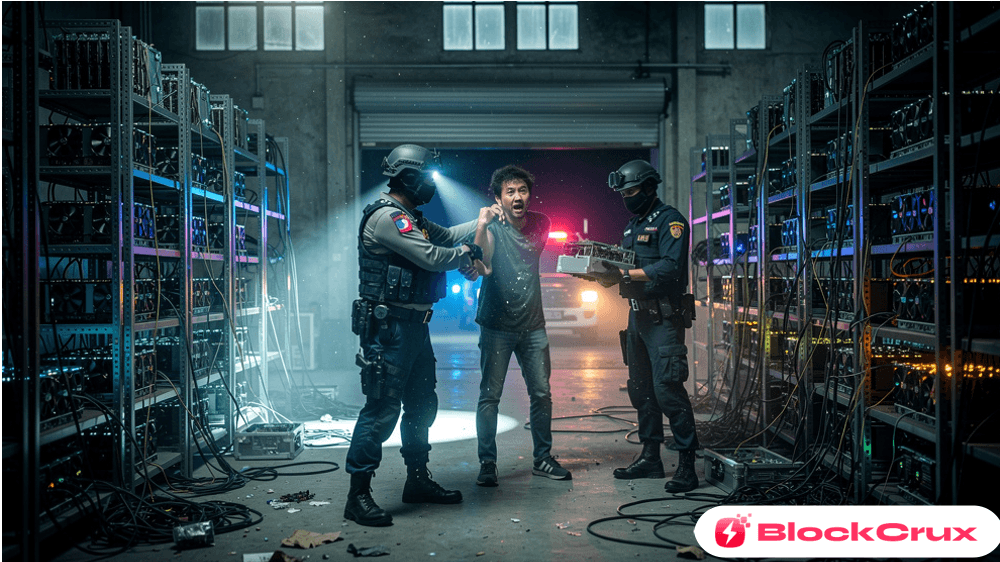
Malaysian authorities have taken down three illegal Bitcoin mining operations in the town of Tronoh, Perak, according to the New Straits Times. Two men, aged 40 and 52, were arrested during the raids. Police also seized 73 cryptocurrency mining rigs, mostly ASIC hardware. The raids were carried out jointly with Tenaga Nasional Berhad, the national utility company, after officials noticed signs of electricity theft at the sites.
Raids Follow Suspicion of Power Theft
The three locations were all pulling electricity directly from the national grid without paying for it. That is a serious issue in Malaysia, where Bitcoin mining rigs can consume large amounts of power around the clock. TNB has been working closely with police to identify buildings where usage patterns look wrong. In this case, the evidence was enough to justify the raid.
Both suspects are now being investigated under laws related to electricity theft and damage to electrical installations. If convicted, they could face fines and jail time. The exact penalties depend on how much power was stolen and how the court decides to handle it. The mining machines have been confiscated and will be used as evidence.
Illegal Mining Is a Recurring Problem
This is not an isolated case. Across Malaysia, utility companies have found many setups where miners bypass meters or tap directly into power lines. TNB has reported millions of ringgit in losses every year because of this. The Perak region, where Tronoh is located, has seen a number of these operations. They tend to hide in residential areas or industrial buildings, but the heat and noise from the machines often give them away.
I think one of the harder parts for authorities is that Bitcoin mining itself is legal in Malaysia. The problem is not the mining. The problem is stealing electricity to run the machines. Legitimate miners have to deal with high energy costs and follow strict utility rules. Those who try to cut corners by stealing power are taking a real legal risk.
What This Means for Miners
The Tronoh raid is another reminder that enforcement is active. Malaysian authorities have been cracking down on illegal crypto mining for years, and they are likely to keep doing so. For anyone involved in mining, the safest path is to pay for electricity properly and stay within the law. Energy theft is treated as a criminal offense, and the consequences can be severe.
The case also shows the ongoing tension between proof-of-work mining and infrastructure security. Mining uses a lot of electricity, and when that electricity is stolen, it puts extra pressure on the grid. That affects everyone, not just the utility company. So while the arrests may seem like a small operation, they are part of a much larger pattern.