Many people who have bought crypto inside a wallet app have used Mercuryo without ever seeing its name. The “buy crypto” button looks like part of the wallet. Behind it, a separate company handles the identity checks, the fraud screening, the licences and the movement of money. That hidden layer is the business Mercuryo has built, and according to one of its senior executives, it is where much of the payments industry is heading as stablecoins move from trading into everyday use.
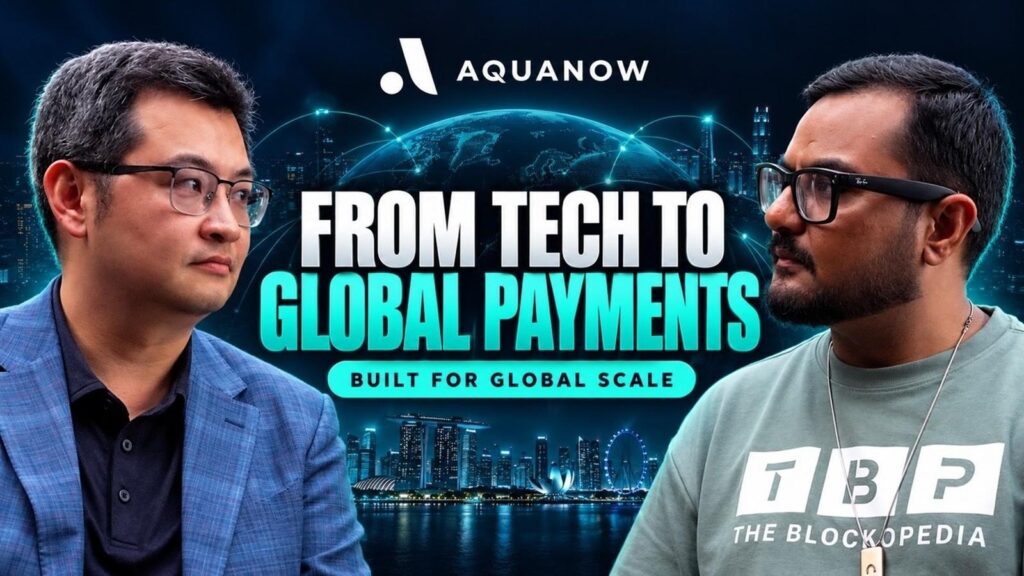
On the sidelines of Token2049 in Singapore, Amreen of The Blockopedia sat down with Arthur Firstov, Chief Business Officer at Mercuryo, for the TBP Podcast. Amreen introduced Mercuryo as the company quietly powering the crypto button inside large wallets such as MetaMask, Tangem and the Bybit wallet. Over ten minutes, the conversation covered how Mercuryo moved from cross-border payments into stablecoins, the most common mistake companies make with banks and payment partners, where in Asia stablecoins are entering daily use, why payroll and remittance companies now want crypto payment products, and his advice for a first purchase.
Key Takeaways
- Mercuryo is built to be invisible. Arthur says the product is “fully API, fully white label”, so wallets and apps offer crypto payments under their own brand while Mercuryo handles identity, fraud and compliance.
- The company started with cross-border payments for crypto businesses. Stablecoins came later, adopted first by businesses as a faster and cheaper way to settle with each other, then more slowly by retail users.
- The most common mistake firms make with banks and payment partners, he says, is a lack of communication. Trust takes time to build.
- Arthur calls Asia and the wider APAC region a “super interesting corridor”, where businesses already use stablecoins day to day and build payment routes to the US, Latin America, Europe and the Middle East.
- Mercuryo’s focus for the next 12 months stays the same, but its customers now include payroll firms, remittance companies and large payment providers testing crypto payouts and deposits.
- His advice before a first purchase: use a trusted, widely used app in your region, be aware of scams, and do not invest before you understand what you are buying.
From cross-border payments to stablecoins
Amreen opened by noting that Arthur has been in crypto since 2017, when stablecoins were still a boardroom topic. What pulled him into this side of the industry?
Arthur says Mercuryo’s path was different in terms of use cases. The company started with a simple idea: build cross-border payments for crypto companies and the wider digital asset economy. Stablecoins, he says, came a little after the team decided to build that product.
In the early years, most activity was speculative. People wanted to buy crypto with their bank accounts, or sell it. Then Mercuryo watched stablecoin adoption grow, starting with businesses rather than individuals. Companies found that stablecoins were a “faster, easier and cheaper way to do the cross-border settlements and payments to each other,” he says.
Retail users followed more slowly. Today, Arthur points to remittance firms, payroll companies, new banks and fintechs that offer stablecoins as a main product. For Mercuryo, he describes the change as a slow shift rather than a sudden pivot.
Mercuryo was founded in 2018, according to its own website. Its company profile on CryptoSlate says it first launched as a wallet for buying crypto with a bank card, then moved to an infrastructure-first model in 2019, supplying payment and compliance technology to other platforms. Its co-founder and chief executive is Petr Kozyakov.
What is Mercuryo? The payment button you never see
Most people, Amreen said, have used Mercuryo without ever seeing the name inside the wallet. How would Arthur explain the company to someone hearing about it for the first time?
He describes Mercuryo as a software company that holds the licences and runs compliant, regulated infrastructure. That infrastructure lets others offer financial products, fintech services and neobanking experiences to crypto-native users and crypto-native companies.
The invisibility is deliberate. “Somebody never saw it and never understood that they made a transaction with Mercuryo,” he says. “But in reality we built the product the way that it’s fully API, fully white label.”
White label means the partner puts its own brand on the experience. The user stays inside the wallet or app they already trust. Mercuryo sits in the background and, in Arthur’s words, automates and abstracts away many of the components a company would otherwise need to build a financial stack on stablecoins. He gives examples:
- the identity layer, meaning know-your-customer (KYC) checks
- fraud checks
- regulation and compliance questions that change from one jurisdiction to another
Partners reach these services through APIs and present them as their own. Arthur compares the goal to the native payment experience people already know from apps such as Uber and Grab.
The simplest example is an on-ramp: the step where a user turns ordinary money, such as euros on a bank card, into crypto. Mercuryo’s website says its on-ramp has more than 12 million KYC-verified users, is available in 150 countries and is used inside more than 500 apps, with partner logos including MetaMask, Trust Wallet, Ledger, Bybit and Tonkeeper.
The most common mistake: a lack of communication
Amreen asked what the most common mistake is when crypto companies try to partner with banks or payment companies.
Arthur’s answer is plain. “It’s just a lack of communication in the first place,” he says.
He widens the point beyond crypto. Many businesses have never worked closely with a payment company. They know how to add a Stripe link to accept payments. But cross-border payments, bank accounts and settlement in different currencies are a different matter. “I think it’s really hard and complicated to navigate how it works and who is the best partner for it,” he says.
Even with conferences and heavy marketing, he says, the core problem is still communication: getting a partner to know your brand, and to trust your brand with their money. Arthur says it takes quite some time to build that awareness first, and then the trust needed between a payments provider and a crypto firm, enterprise, fintech or bank before a payment product launches. That is especially true now for stablecoin and crypto payment products.
Which Asian markets are pulling stablecoins into everyday use?
With the interview recorded in Singapore, surrounded by Asian founders and builders, Amreen asked which market is pulling stablecoins into everyday use.
Arthur starts with the United States. There, he says, regulation has pushed many payment companies, banks and financial institutions to adopt crypto, digital assets and stablecoins, and bigger brands are making moves.
Asia looks different to him. In Singapore, for example, he sees a very large number of businesses that were already using stablecoins for day-to-day operations. He calls Asia, and APAC in general, a “super interesting corridor”. Businesses in the region are building international companies and payment corridors with the US, Latin America, Europe and the Middle East, and they are looking for the best partners to do it.
“I think stablecoin adoption here is pretty huge,” he says, linking it to Token2049 itself, which he notes draws more attendees every year and felt even busier this time.
Mercuryo’s own figures point in the same general direction, though they are global rather than Asia-specific. In a July 2026 press release, the company said stablecoins made up 60% of total crypto purchase value through its on-ramp in the first half of 2026, up from 43% in the second half of 2025. Stablecoins also accounted for 47% of first-time crypto purchases, compared with 33% six months earlier.
Mercuryo’s next 12 months: same focus, new customers
Asked about Mercuryo’s biggest focus for the next 12 months, Arthur says the core mission has not changed. The company has always worked on products that let people move money and value across countries, assets, chains, platforms and financial institutions. “So, the focus remains the same,” he says. In practice, that means polishing the products and offering partners more customisable experiences.
What has changed is who is asking. “Before it was only crypto companies,” he says, meaning crypto-native enterprises such as wallets, exchanges and brokers. Those firms are still customers. But Arthur sees many newcomers built around new narratives, including prediction markets, decentralised exchanges, perpetual futures DEXs and other trading platforms. They need the same type of products Mercuryo already builds.
Mercuryo’s product range has widened to match. Its website lists on-ramps, swaps, pay-ins, pay-outs and Spend, a co-branded card product it launched with Mastercard in 2024. In March 2026, Mastercard named Mercuryo among the more than 100 companies in its new Crypto Partner Program. In October 2026, FF News reported that Mercuryo launched cross-chain swaps and ran a zero-fee on-ramp offer for new MetaMask users in Canada.
Why payroll and remittance firms now want crypto rails
The bigger shift, Arthur says, is demand from traditional financial institutions. The products Mercuryo builds for crypto firms are now “widely demanded” by traditional players too. He names payroll companies, remittance firms and the “PayPals of this world”.
Rather than rebuilding around crypto, many are launching one part of it, “just to test the waters”. His examples include payouts in crypto and deposits in crypto, and the video’s chapter notes add cards and ramps to that list.
It is the same pattern Arthur described with stablecoins: businesses move first, and consumers follow. Looking further ahead, he expects industries well beyond finance, payments, fintech and crypto to adopt the same technology and offer those experiences to their own users. “Slowly and slowly” is how he puts the pace. That is a forecast from someone who sells this infrastructure, not a trend that has already played out at scale.
Advice before your very first purchase
Amreen’s last question: what is the one piece of advice for someone about to make their very first purchase?
Arthur says it depends on the platform and on what the person wants to do. Many people today want to buy stablecoins to send money to family, to friends in another country, or to business counterparties. For that use, he says, stablecoins are the easiest way.
His practical advice is to “find the best partner, the best consumer interface, the wallet, the app” that is widely used by people in your region. He expects the major ones already offer crypto and use stablecoins. Even long-standing firms such as MoneyGram, PayPal and Western Union, he says, are moving into stablecoins and crypto, so people can use them where available.
Then comes the warning. “Be aware of scam. Don’t invest before you know something,” he says.
He closes by saying that stablecoins feel like a fairly safe experience, especially with trusted brands. That is his view, and it has limits. A stablecoin is only as sound as its issuer and reserves, prices can slip from the peg, and scammers often copy the look of well-known apps. A trusted app reduces some of those risks but does not remove them.
Final thoughts
The interview makes one point clearly: some of the most important companies in crypto payments may be the ones users never see. Mercuryo’s model is to hold the licences, run identity, fraud and compliance checks, and let wallets, exchanges and now traditional payment firms put their own brand on the result. Its own data, showing stablecoins at 60% of on-ramp purchase value in the first half of 2026, supports Arthur’s view that stablecoins are moving from trading towards payments.
Some of what he said is forecast rather than fact. His expectation that industries far beyond finance will adopt these rails, and his read on APAC as a key stablecoin corridor, are informed views from inside the industry, not settled outcomes. First-time buyers should follow his own advice: use a trusted app, watch for scams, and understand what they are buying first.
Watch the full conversation on the TBP Podcast YouTube channel.
Frequently Asked Questions
Q: What is Mercuryo?
Mercuryo is a crypto payments infrastructure company founded in 2018. It provides on-ramps, swaps, pay-ins, pay-outs and co-branded crypto cards that wallets, exchanges and apps offer under their own brand. Arthur Firstov describes it as a licensed, regulated software company whose products are fully API-based and white label.
Q: Why do people use Mercuryo without seeing its name?
Because the product is white label. A wallet or app shows its own buy button, while Mercuryo handles identity checks, fraud checks, compliance and the payment in the background. Arthur says many users never realise they made a transaction with Mercuryo.
Q: What mistake do crypto companies make when partnering with banks and payment firms?
Arthur says the most common mistake is a lack of communication. Cross-border payments, bank accounts and foreign exchange settlement are hard to navigate, and building awareness and trust with a partner takes time.
Q: Which region does Arthur Firstov see driving everyday stablecoin use?
He points to Asia and the wider APAC region, using Singapore as an example. He says many businesses there already use stablecoins day to day and are building payment corridors with the US, Latin America, Europe and the Middle East.
Q: What kinds of companies now want stablecoin payment products?
Beyond wallets, exchanges and brokers, Arthur sees demand from prediction markets, decentralised exchanges and trading platforms. He also names payroll companies, remittance firms and large payment providers testing crypto payouts and deposits.
Q: What should I do before my first crypto or stablecoin purchase?
Arthur advises using a trusted wallet or app that is widely used in your region, being aware of scams, and not investing before you understand what you are buying. This is general information, not investment advice. Crypto assets are volatile, stablecoins carry issuer and peg risks, and you can lose money.