The news that Bitcoin mining is evolving into a broader energy-backed compute industry has been confirmed by major players. During the first quarter of 2026, several publicly traded Bitcoin miners, including Core Scientific (NASDAQ: CORZ), Cipher, and IREN, reduced portions of their mining operations, reallocating power and infrastructure toward AI and high-performance computing (HPC). This shift is already reflected in financial results.
Hashprice pressure drives change
With Bitcoin mining economics under pressure from historically low hashprice levels of mining revenue and rising network competition, AI and HPC infrastructure revenue has emerged as a stabilizing factor. In some cases, it has become a significantly larger growth driver. Core Scientific has accelerated converting its infrastructure toward high-density colocation for CoreWeave (NASDAQ: CRWV). Cipher shut down mining at parts of its Black Pearl facility after securing a long-term hyperscale AI lease. IREN has repositioned as an AI cloud infrastructure operator, signing multi-billion-dollar agreements.
Infrastructure becomes the strategic asset
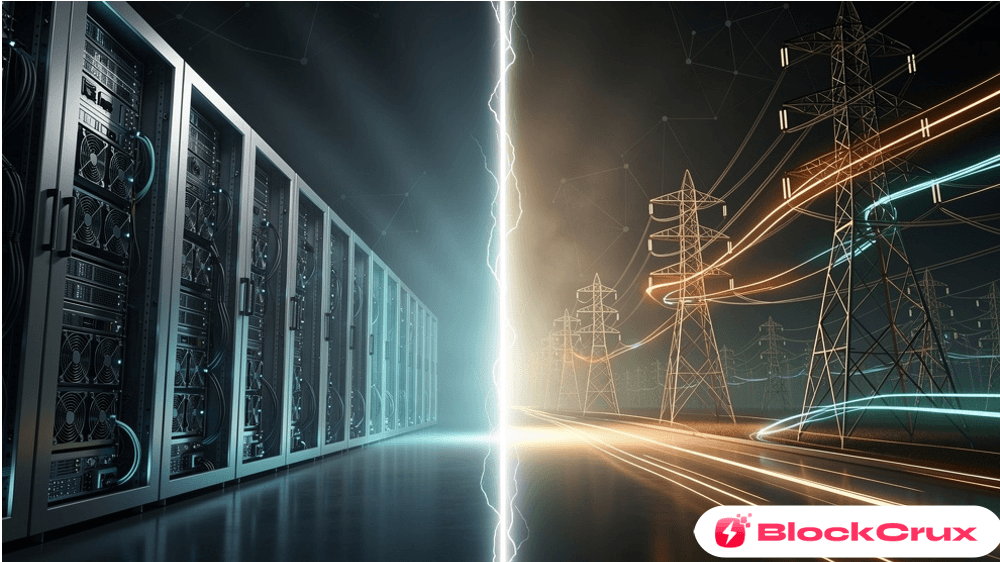
Grid-connected infrastructure, including substations, transmission access, and long-term power contracts, has become scarce and strategically valuable. Sites originally built for mining are attracting interest from AI operators because they solve the problem of getting large amounts of power to usable compute space. The industry is evolving beyond pure mining toward energy-backed compute infrastructure, where companies expanding into AI colocation, securing power-generation assets, and developing flexible compute facilities.
Flexible compute infrastructure rises
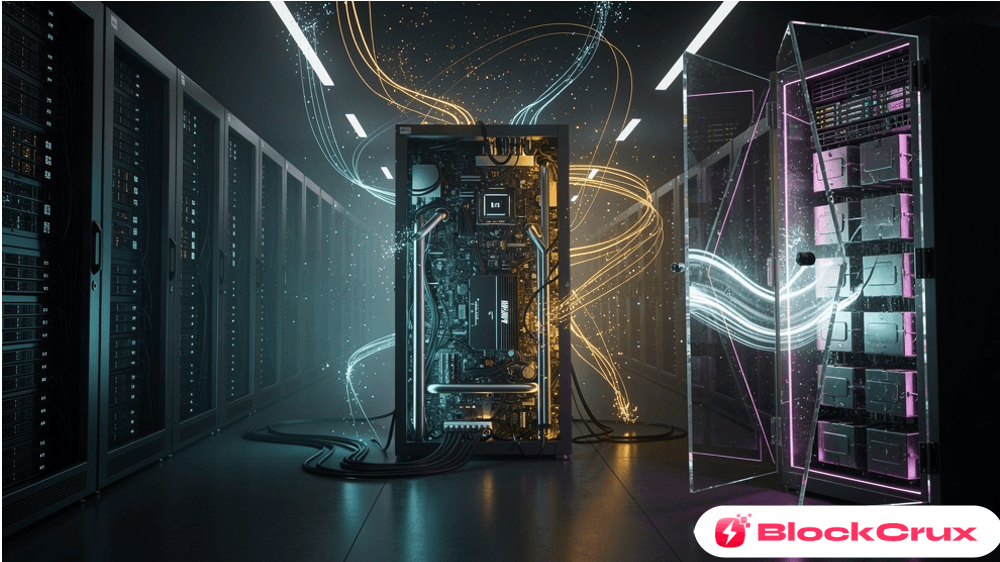
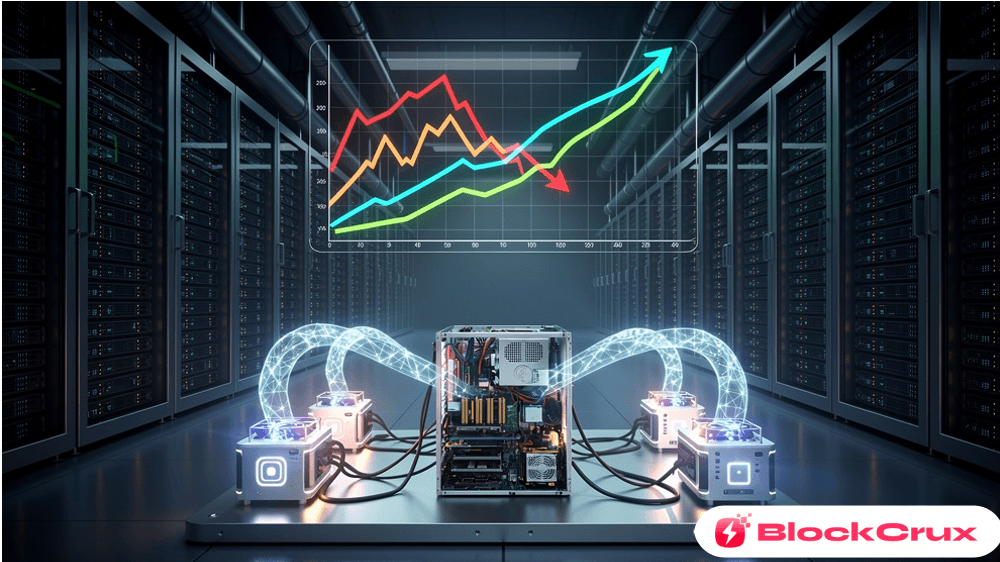
Mining campuses are modular by design, built around power distribution and high-density compute, making them adaptable as workloads evolve. This flexibility matters as demand for AI infrastructure evolves rapidly. Operators increasingly value infrastructure that can switch between mining and AI rather than remain tied to a single application. In many cases, miners immediately monetize new power capacity through mining while retrofitting for higher-margin AI workloads. Bitcoin mining is seen as one layer within a larger energy-backed compute ecosystem.
The future path
The future relevance of Bitcoin mining may depend less on the Bitcoin it produces and more on the infrastructure it creates. The most successful operators resemble infrastructure companies, energy developers, and compute platform operators. Bitcoin mining was one of the earliest large-scale systems converting electricity into digital computation globally. The rest of the computing industry now faces the same problems miners spent a decade solving. This is not a contest between Bitcoin and AI, but the industrialization of computation, and miners reached this frontier first.