Digital payments have evolved dramatically since their popularity at the peak of the COVID-19 pandemic, transitioning from the early days of simple online transactions to an era where instant, global value exchange has become more common.
As payment technology continues to advance, more people and enterprises are in constant search of payment systems that are not only faster and cheaper but also more transparent. According to the latest World Bank Global Findex data, digital account ownership in the Europe and Central Asia (ECA) region rose from 57% to 77% of adults over the last decade, while the share using digital payments rose from 33% to 53%.
This evolution is largely driven by changing user expectations, as more people today demand seamless, immediate transactions that fit their on-the-go lifestyles.
The expansion of global commerce has introduced a new layer of complexity to payment systems. Businesses are no longer confined to local markets; they now operate on a global scale, demanding payment solutions that handle cross-border transactions with ease and efficiency. In this changing landscape, innovation in payment technology is crucial.
The Evolution of Digital Payments
As we navigate into an increasingly digital financial landscape, it’s important to understand the evolution of payment systems.
Before we dive into instant electronic transfers and digital currencies, in the early 20th century, the business world operated merely on trust. Cash was king, along with handwritten ledgers, and face-to-face transactions dominated the financial operations.
From the 1910s to the 1960s, we transitioned from cash to cards, particularly credit cards. Department stores and oil companies started these systems not just as payment tools but as examples of customer relationship management. Fast-forward to today: millions of active cards remain in circulation worldwide, despite the rise of online banking, digital wallets, QR codes, and mobile payments.
Speaking of online payments, the evolution of e-commerce has permanently changed payment processing, shifting it from a mere back-office task to a crucial business strategy. By integrating payment systems with broader business operations, organizations have achieved unprecedented levels of automation and oversight. Enhanced security features, such as real-time fraud detection, along with the convenience of digital wallets, have streamlined the payment processes.
In the 2010s – 2020s, more contactless transaction capabilities were introduced and popularized due to the pandemic, ultimately accelerating payment processing. Real-time expense tracking, integrated with treasury management systems, provides visibility into cash flows. As we welcome more emerging technologies like blockchain and AI, the payment settlement continues to offer new possibilities.
Challenges Facing Today’s Payment Systems
However, today’s digital payment systems face four major challenges: high transaction costs, cross-border payment delays, lengthy settlement times, and limited transparency.
Cross-border delays can occur when international payments move through multiple intermediaries, currencies, and regulatory systems. Transaction costs can also add up, with banks, payment processors, card networks, and foreign exchange providers charging fees for every transaction.
Countries like the Philippines and India are now enacting regulations to cap or eliminate transaction fees to ensure fairer pricing for digital payments. In contrast, countries like the United States and Mexico still face high digital payment and card processing costs.
Settlement times can extend beyond the moment a payment appears to be completed, leaving funds tied up between financial institutions. Limited transparency adds another layer of challenge as businesses and customers may have little visibility into a payment’s progress, the fees, or when funds will be settled.
Apart from that, Native Teams identified regulatory compliance, fraud, and security risks as hindering the adoption of today’s digital payment systems.
The firm explained that navigating through a complex web of international financial regulations is one of the most significant challenges that businesses face in global payment processing. Each country has varying compliance requirements, anti-money laundering (AML) regulations, and tax rules, making it difficult to comply with the laws. Nowadays, fraudsters and hackers continue to exploit vulnerabilities in global payment networks, leading to business or institutional financial losses and reputational damage.
How Blockchain Is Influencing Payment Innovation
Blockchain technology stands out as a key player in this digital payment revolution.
By providing a decentralized and transparent ledger, blockchain enhances security and improves the traceability of transactions. Blockchain also enables faster settlement times, reduces transaction costs, and eliminates the need for intermediaries, streamlining the payment process.
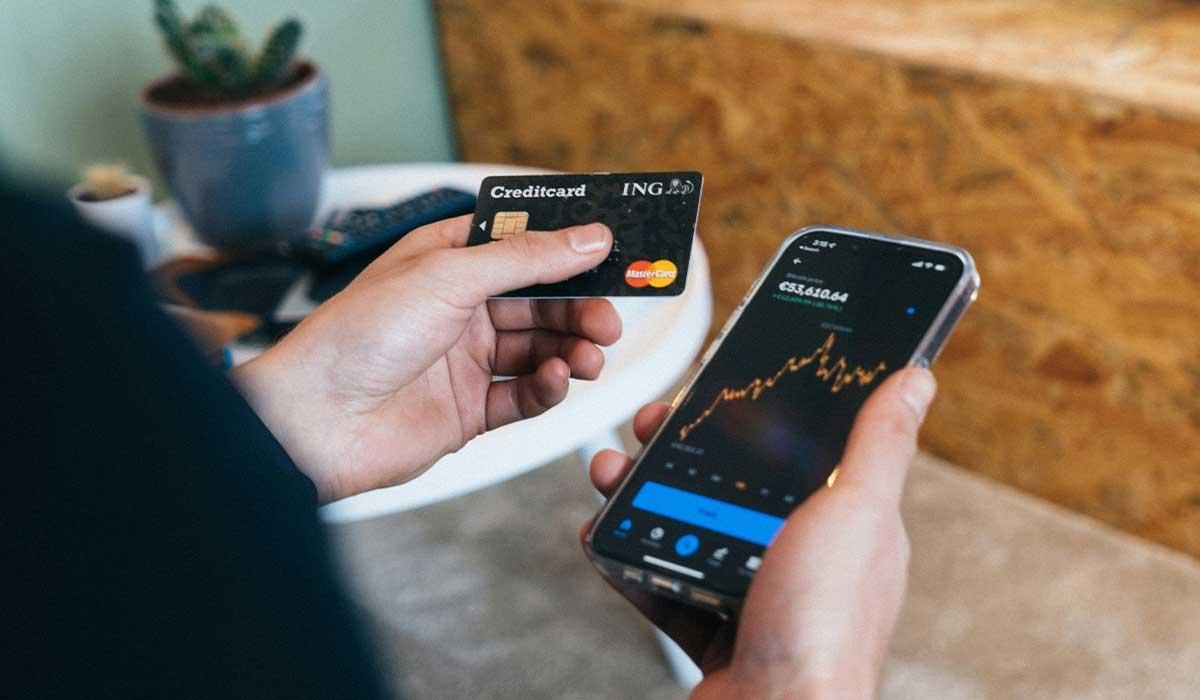
Another thing blockchain enables in the digital payment ecosystem is micropayments: small financial transactions, usually made online.
Micropayments are influencing the payment industry by making transactions that are too small or costly for traditional payment systems economically viable.
Blockchain enables low-value payments to be processed with lower fees and greater efficiency, opening the door to new models such as pay-per-use services, digital content micropayments, in-game purchases, data monetization, and machine-to-machine payments.
As the Internet of Things (IoT) and microservices expand, the ability to send small amounts of value quickly and frequently could make these tiny payments more embedded in everyday digital transactions.
Rather than relying on fixed subscriptions or large transactions, businesses can charge consumers only for the product or asset they use, while automated systems and connected devices can exchange value without requiring traditional intermediaries.
Blockchain is also influencing payment innovation by improving the efficiency of cross-border transactions.
Traditional international payments and remittances often involve multiple intermediaries, currency conversions, fees, and long settlement times. Blockchain-based payment systems can streamline these processes by enabling faster, more direct cross-border transfers of value, reducing friction, and potentially lowering transaction costs.
As enterprises seek to meet the demands of a global, digital-native consumer base, blockchain is positioning itself as a vital component in the future of digital payments, paving the way for more efficient, transparent business practices.
Industries Adopting Blockchain Payments
Blockchain is increasingly shaping the payments sector in retail, finance, gaming, trade, and digital content.
In retail, nearly 4 in 10 US merchants accept digital currency at checkout, according to a January 2026 report by the National Cryptocurrency Association and PayPal. The figure rises to 50% among the large enterprises. The report covered 619 payment decision-makers across retail and e-commerce, hospitality, luxury goods, and digital gaming.
Retail adoption is moving toward blockchain in the background, as customers pay with stablecoins and digital currencies while merchants receive fiat.

Arguably, the strongest industry to adopt blockchain is financial services.
In 2025, the Bank for International Settlements (BIS) estimated that stablecoins processed around $390 billion in payments. While JPMorgan, a finance giant, is already moving its JPM Coin, the bank has reported that the coin has processed $1 billion in daily transactions at its peak.
Financial institutions are also using blockchain not necessarily for consumer-facing crypto payments, but for settlement, treasury, cross-border transfers, and payment infrastructure.
Gaming has a different adoption pattern.
Rather than simply accepting Bitcoin payments or stablecoins at checkout, blockchain payments are often integrated into in-game economies, digital assets, NFT transactions, and even peer-to-peer payments. This demonstrates that blockchain payments can become part of the digital economy, allowing players to transfer value and digital assets rather than merely using blockchain as a tool or another checkout option.

Adopting blockchain in international trade could reduce settlement times, dependence on intermediaries, FX friction, and working-capital delays. McKinsey estimates that B2B stablecoin payments accounted for around $226 billion annually, representing roughly 60% of total stablecoin payment volume. B2B stablecoin payments grew 733% year-over-year, they add.
Lastly, in the digital creator economy, blockchain is particularly relevant because creators often work across borders.
Digital assets like crypto and stablecoins can reduce payment delays, currency conversion costs, and dependence on traditional international payout systems. Just recently, Meta quietly rolled out USDC payments for creators, initially in Colombia and the Philippines, with plans to expand to more than 160 markets.
What Businesses Should Watch
Businesses should not assess blockchain payments solely based on speed or cost. Instead, they should focus on whether the network is compliant with regulations, widely accepted by customers, compatible with existing payment systems, and scalable enough to manage high transaction volumes.
Let’s explore how regulation, consumer adoption, interoperability, and scalability should be considered in payment systems:
1. Regulation
Businesses should closely monitor how governments regulate stablecoins, digital assets, and blockchain-based payment providers. Regulations determine which blockchain payment models can operate legally, what KYC/AML, consumer protection, and reserve requirements businesses must meet, and how cross-border transactions are handled.
What to watch out for: Licensing requirements, AML-KYC rules, consumer protection, taxation, and cross-border regulatory compliance.
2. Consumer adoption
Any payment method, whether digital or blockchain-based, can only become commercially valuable when customers and merchants actually use it. Businesses must look beyond transaction volumes and determine if customers are using blockchain-based payments for their daily purchases, remittances, and other real-world activities. Blockchain isn’t an efficient addition to your payment options if the customers aren’t familiar with the technology or if the transaction costs are high for the merchant’s use.
What to watch out for: Consumer trust, ease of use, merchant acceptance, transaction costs, and wallet adoption.
3. Interoperability
As more blockchains and tokenized payment networks emerge, businesses need to avoid becoming locked in a single network. As BIS warns, fragmented networks can trap liquidity and undermine the blockchain’s effects, while interoperable systems can allow those effects to compound.
Interoperability determines whether funds can move seamlessly between different blockchain networks, banks, payment systems, or digital wallets. If using a certain blockchain network hinders interoperability of funds, enterprises should determine whether adopting it will be beneficial.
What to watch out for: Common standards, cross-chain settlement, wallet compatibility, connections to existing payment rails, and risks.
4. Scalability
Lastly, businesses need to check whether blockchain networks can handle high payment volumes at a consistent speed and low cost. A system that works well for a pilot may struggle when transaction volumes increase.
What to watch out for: Transactions per second, network congestion, fees during peak periods, settlement finality, uptime, and the network’s ability to scale without sacrificing security.
Conclusion
The evolution of digital payments shows that innovation does not necessarily mean replacing existing systems but rather making payments faster, more accessible, more efficient, and more transparent.
Blockchain is contributing to this evolution by addressing some long-standing challenges in payment infrastructure, specifically in cross-border transfers, settlement times, and transaction costs. Blockchain’s use across financial services, retail, international trade, gaming, and the creator economy demonstrates that the technology can serve as an additional layer of payment infrastructure rather than a replacement for traditional financial systems.
For enterprises, however, blockchain adoption should go beyond asking whether it is faster or cheaper. Regulation, consumer adoption, interoperability, and scalability largely determine if blockchain-based payments can move from experimentation to a commercially viable system. A blockchain network may offer faster settlement, but limited regulatory clarity, low adoption, and scalability constraints may limit its value.
Ultimately, blockchain’s role in payments may be less about conventional banks, card networks, or digital payment rails and more about complementing them—filling gaps and enabling new ways for businesses and consumers to move value in the global and digital economy.