Gasless crypto transfers are becoming common. Chains like Stable, Plasma, Sui, and BNB Chain offer zero-fee stablecoin sends. But the catchy headlines always note: someone still pays for blockspace. Then they move on. This article stops to answer that question.
The Cost That Doesn’t Disappear
Processing a transaction costs real resources. Validators use computation, storage, bandwidth, and staked capital. On Ethereum, users pay gas. In a gasless system, that bill is relocated, not eliminated. The chain must compensate validators from another source and ration blockspace without price.
Rationing often uses non-price limits: allowlists, rate limits, or priority queues. Sui, for example, lets paid transactions jump ahead of free ones during congestion. Free means lowest quality of service.
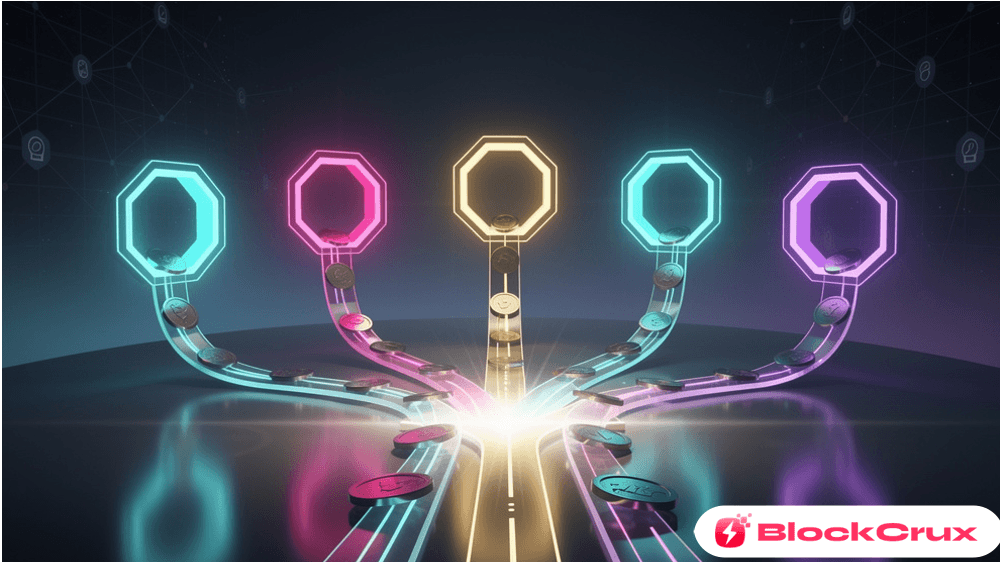
Five Ways to Fund Free Transfers
Holder dilution: New tokens are issued to pay validators. This inflates supply and costs all holders. It works as long as the token price holds. Foundation war chest: A treasury from investors covers costs. It is finite and leads to a subsidy cliff when drained. Cross-subsidy: Paid activity on the chain, like complex transactions, funds the free tier. This needs a large paying economy first. The patron: An adjacent business sponsors the chain as customer acquisition. Tether’s float income makes Stable’s free tier a marketing expense. Paymaster: Apps or merchants cover user gas, like card interchange. It is app-by-app, not chain-wide.
Protocol vs. Application Level
Protocol-level free tiers are written into consensus. Application-level subsidies are private arrangements that can change anytime. The durability differs. A protocol-level exemption survives the failure of any single company. An app-level subsidy dies with its sponsor’s budget.
A Practical Audit
Next time you see free transfers, ask four questions: Who funds it? What rations it? How long is it promised? Who can change it? Answers sort offers into durable products, bootstrap subsidies, or unfunded promises. The gasless era’s real achievement is that durable models now exist. Its hazard is that all three categories look identical. The only party with an incentive to tell them apart is the user.